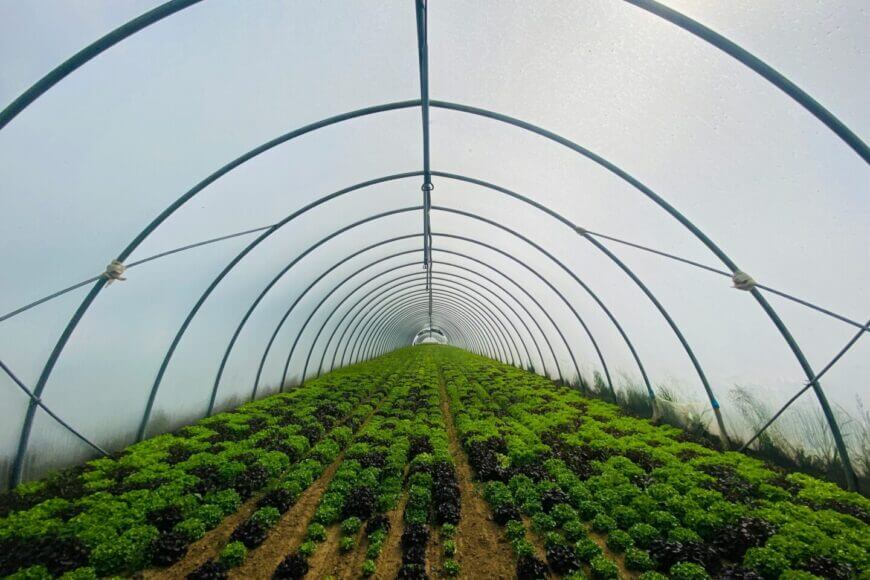
Those in the agricultural sector know better than anyone that a cost-effective energy supply is essential for good yields, whether it’s to produce crops such as wheat, oats, or barley, to grow mushrooms or potatoes, rear chickens, or for grain drying. There are a whole range of things to consider, such as cost-effectiveness, operational efficiency, and sustainability. Then there’s availability, storage and safety requirements, and compatibility with machinery.
With the agricultural sector facing many challenging and politically uncertain times, many farmers are looking to keep costs down and are diversifying to increase income, reduce risk, and enhance the long-term sustainability of the farm business. A versatile fuel source that can be used across a number of various applications is essential.
In this blog, we’re going to look at bulk LPG and why it is increasingly being recognised as the ideal fuel choice for modern-day agricultural and horticultural off-grid operations.
Providing versatility
Bulk liquified petroleum gas, otherwise known as LPG, is suitable for use across a wide range of agricultural and horticultural businesses and can be used practically anywhere. It is incredibly versatile with many different uses, making it a practical, all-in-one solution for farms and horticultural businesses with diverse energy needs.
It can be used for commercial heating and cooking, in hot water systems for dairy operations, pig and poultry farms, for powering generators, fuelling machinery such as LPG forklift trucks, in irrigation systems, and for drying grains, pulses, or other crops.
Due to its versatility, farmers and horticulturists can rely on one energy source for multiple tasks, simplifying operations.
Precise temperature control
LPG delivers instant heat generation and precise temperature control – there’s no long wait for the fuel to reach optimal operating temperatures. This makes it an ideal choice for commercial greenhouse heating, maintaining optimal growing conditions so plants can grow in a stable, controlled, and consistent environment whatever time of year it is.
LPG can play a crucial role in pig farming. Providing background heat and a warm and stable environment for dry sow and fattening houses, it reduces the risk of bacterial growth which can occur when using oil-based systems, and provides consistent warmth for piglets, which are extremely sensitive to temperature in the first few weeks of life.
And in crop drying, even drying temperatures are essential. With farm propane, grain can be dried to exact specifications as LPG provides a steady and easily adjustable heat output, essential for maintaining the precise temperatures needed to dry crops efficiently and without waste, whilst preserving quality and improving storage longevity.
Clean combustion
LPG is widely recognised for its clean combustion properties. The complete combustion process leaves little, if any residue, and produces fewer harmful emissions like carbon monoxide and particulate matter.
So, great news for poultry rearers where the quality of air directly impacts the health of your chicks. Cleaner air means less risk of respiratory issues and a healthier flock overall. Plus, combined with its ability to provide consistent, controllable, and reliable heat, poultry rearers reduce the risk of common diseases and reap the benefit of faster weight gain and even feathering.
And for grain drying, using LPG significantly lowers the risk of mould and spoilage when compared to other carbon fuel sources, which is crucial for ensuring food safety.
Efficiency
LPG is highly efficient – as an exceptional source of energy, it burns efficiently providing a high energy output with relatively low fuel consumption. Because it produces more energy per unit when compared to other fuels, it is ideal for powering farm machinery, irrigation pumps, generators, and heating systems, providing a more cost-effective solution, for instance when used in crop drying where it can reduce drying cycles when compared to other fuel sources. According to the June 2023 Sutherland Tables, heating with LPG, which is just one of its applications, is more cost-effective than using electricity or mains gas for a typical commercial property.
Because it burns cleanly, with LPG there’s little waste, fewer impurities, and less residue, which reduces wear and tear on machinery and equipment and the need for maintenance and repairs. Learn more about improving farm energy efficiency.
Reliability of supply
LPG is especially reliable in remote off-grid locations. Stored in bulk LPG tanks, it’s possible to scale up or down based on your business needs, for example in colder months, additional LPG deliveries can be taken to meet the heightened heating needs in horticulture. Plus, many bulk LPG suppliers offer an automatic refilling service so your business can be sure of a reliable and consistent supply.
Whilst other off-grid energy sources such as electricity can be unreliable in extreme weather conditions due to electrical outages, for instance, LPG’s storage options make it ideal for rural businesses.
LPG doesn’t degrade over time so is provides a reliable energy source, ensuring continuity of operation and making it an excellent, long-term fuel solution.
Safety
Modern LPG boilers and systems come equipped with many safety features such as a gas regulator which is usually located under your bulk LPG storage tank lid and is a critical safety device and incorporates both UPSO and OPSO valves. These are lock-out devices, designed to prevent dangerous situations such as an LPG leak or overpressure of the gas system.
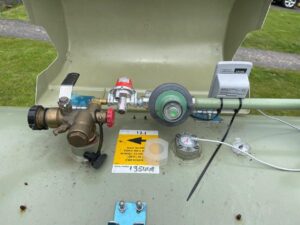
Commercial gas is stored in above-ground or underground bulk LPG storage tanks, and must be in accordance with LPG tank storage regulations UK, These LPG storage tanks are designed to safely contain the gas under pressure. Regular maintenance and routine inspections are important to ensure safety and reliability, but if a leak does occur, with LPG it is less likely to cause any environmental damage as gas vaporises quickly when released into the air, reducing environmental contamination risks. The same can’t be said of oil where a spill can result in significant environmental damage, expensive clean-up costs, and the potential of fines. Plus bulk LPG is virtually impossible to steal so offers a more secure option than traditional fuels such as diesel.
Environmental benefits
LPG is a smart, sustainable choice. It emits fewer greenhouse gas emissions when compared to other fossil fuels, and unlike oil or diesel, it doesn’t release soot, ash, or smoke into the air. This makes it far more suitable for enclosed environments such as dairy barns, poultry houses, or pig sheds.
The UK has set a net-zero target for agriculture by 2040, which is backed by the LPG industry and in particular Liquid Gas UK, the Trade Association for the liquid gas industry in the UK, in its pathway to Net Zero. Adopting renewable energy solutions will play a part in reducing carbon footprints of agricultural operations.
The good news is that renewable gases are on their way which can reduce carbon emissions significantly and are drop-in solutions. At Northern Energy Gas, we're eagerly anticipating the supply of these greener fuel solutions as they become more readily available.
BioLPG, for instance, is chemically identical to traditional LPG, making it fully compatible with existing equipment and infrastructure, so there’s no need for costly retrofitting or new technology investments. For off-grid farms and horticultural businesses, BioLPG will provide a renewable energy source for heating, irrigation systems, grain drying, and much more.
Northern Energy, your independent commercial LPG provider
To conclude, LPG offers significant advantages when compared to other fuel sources, providing a combination of efficiency, clean combustion, and broad applicability. As one of the most versatile energy choices for off-grid farms and horticultural businesses, it can be used in a huge number of applications, creating a healthier environment for animals, crops and humans alike. And it’s great for your business’s bottom line and carbon footprint too!
If you’re looking to switch to LPG from another energy source, or even just switch LPG supplier, as one of the UK’s leading independent suppliers that delivers throughout the UK, at Northern Energy Gas we will work with you to help you reduce your business costs and lower your carbon emissions.
Call us today on 01423 772 789 to find out more.