Thousands of off-grid businesses across the UK, including those in hospitality, industrial processing, holiday parks and agriculture, depend on liquid petroleum gas (LPG) to fuel their activities.
Reliable, versatile, efficient, and lower in carbon emissions than many other off-grid alternatives, LPG provides a consistent, dependable, and cost-effective energy source so off-grid businesses can enjoy all the benefits of gas without being connected to the mains gas grid.
For these off-grid businesses, safety is paramount and critical to maintaining operations. At Northern Energy Gas, safety is our top priority, too. LPG is a very safe energy source when stored and used correctly, and while gas incidents are very rare, when they do occur, it’s essential your teams know how to recognise warning signs and respond swiftly to protect your premises, your staff and your operations if a leak does occur.
In this blog, we’re going to provide practical steps to help prevent leaks and advise on how to identify early warning signs and respond effectively in the event of a suspected LPG leak.
Best Practices for Commercial LPG Safety
Your bulk LPG tank is owned by your supplier and is equipped with safety devices to ensure it is as safe as possible. These include the UPSO/OPSO (Under Pressure Shut Off/Over Pressure Shut Off device), for instance, which is designed to automatically shut off the gas supply to your premises in the event of an issue.
While routine maintenance and tank testing are the responsibility of your LPG supplier, getting to know your tank and system and undertaking proactive site checks can go a long way in preventing potential issues. Inspection is prevention!
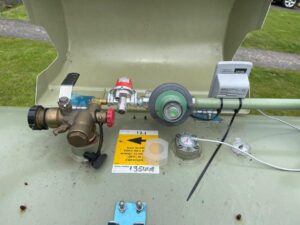
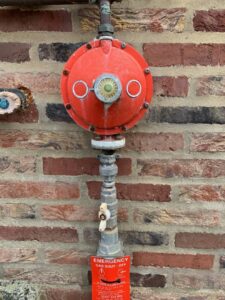
Familiarise yourself with your bulk LPG tank and the surrounding pipework. Ensure you know the location of key safety components like the Emergency Control Valve (ECV). This is usually located where the LPG enters your premises.
 Also, ensure you know where to turn off the supply at the tank. The shut-off valve (service isolation valve) is usually on top of the tank under the hood – this can be closed by turning it clockwise.
Inspect your LPG tank on a regular basis – check for signs of rust, dents or corrosion and general wear and tear. Look for damaged valves or pipework, and check for frosting, which may be an indication of a leak. Consider installing LPG gas detectors to provide early warning of potential leaks, helping to prevent minor issues from becoming major problems.
Ensure the area around your tank is kept free of clutter, combustible materials, and is well ventilated - this is not only important for safety, but your driver needs access to deliver. LPG is heavier than air and can accumulate in low-lying areas in the event of a leak if ventilation is inadequate, creating a significant risk of fire or explosion. Proper ventilation helps maintain a safe environment by preventing gas build up and ensuring compliance with safety regulations.
The LPG tank sticker on your tank must be kept clean and clearly visible. This sticker should never be removed. It contains essential emergency contact numbers and hazard symbols that the emergency services would need in the case of an incident.
If you spot anything unusual or concerning, contact your LPG supplier immediately. If you suspect an LPG leak, never attempt to repair it yourself. Proper diagnosis and repair requires specialised expertise and equipment, and must be left to the professionals. Do not DIY! Any servicing or repair work should only be carried out by a fully qualified GAS SAFE registered engineer. And do not resume operations or turn the gas supply back on until your supplier or a certified engineer has fully inspected it and confirmed it's safe to do so.
Recognising the warning signs
Early detection of an LPG leak can prevent serious incidents. Gas leaks are a serious hazard as LPG is highly combustible, and even a small spark can trigger a fire or explosion.
Look out for:
- An unusual and unpleasant odour. LPG is naturally odourless, but an additive is added to give it a very distinct smell, often described as rotten eggs or cabbage
- A hissing sound near your tank or pipework. This may be an indication that there’s gas escaping
- Dead vegetation. Unexplained dying or dead plants around the area of your bulk LPG storage tank could be a sign of a slow leak
- Frost build-up. Escaping LPG absorbs heat rapidly, causing visible frost on surrounding components
- Physical symptoms. Staff experiencing dizziness, nausea, headaches, or light-headedness may be an indication that gas is escaping. Move them into fresh air immediately, and if symptoms persist, get medical attention
Got a Gas Leak? – Here’s What to Do
Firstly, stay calm and don’t panic. Speed is critical – but so is caution.
Shut off the supply if safe to do so. Move the manual outlet valve on your LPG tank, and shut off the ECV at the point where the gas enters your premises.
Turn off all gas appliances, do not operate electrical switches, including light switches, and extinguish all open flames - no smoking and no naked lights!
Ventilate the area. Open windows and doors to allow the LPG to disperse, and keep clear of enclosed or poorly ventilated spaces.
Move all personnel to a safe location, ideally upwind of the suspected leak, and keep vehicles and machinery away from the area.
Call your LPG supplier or, in the case of a fire, dial 999, ask for the Fire Brigade and inform them there’s a bulk LPG storage tank on site.
If anyone is affected by exposure to LPG, seek medical attention without delay.
Need Assistance?
Our customer service team is always ready to help you stay safe and compliant. Your safety is our priority!
If you are a Northern Energy Gas customer and you need support or suspect a leak, you can contact us during office hours on 01423 772 789.
For out-of-hours emergencies, call us on 07712 773 230 (Northern Energy Gas customers only).
FAQ’s – LPG Safety for Businesses
What are the signs of an LPG leak?
- Rotten egg or cabbage smell
- Hissing sound
- Dead vegetation
- Frost on the LPG tank, valves or pipework
- Headache, dizziness, nausea
What should I do if I suspect an LPG leak?
- Shut off the supply if it is safe to do so
- Ventilate the area
- Evacuate
- Call your LPG supplier or the emergency services
- Contact a qualified GAS SAFE engineer
Is it safe to remove snow or ice from my LPG tank?
Yes. Use a broom to gently remove, but never use heat sources or a shovel
Can I paint my LPG tank?
No. Painting your LPG tank can compromise safety and affect its protective coating
Should I install an LPG gas detector?
Yes – especially in commercial premises. Leak detectors provide early warnings and enhance overall site safety