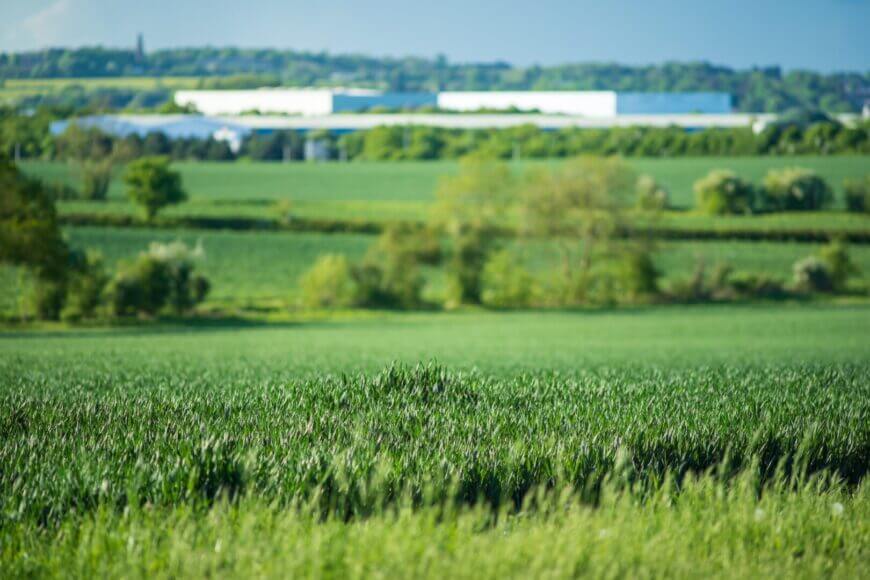
Off-grid rural businesses are often in remote locations which in itself can bring the benefits of beautiful scenery, clean air, little if any congestion, and access to nature – all in a quiet and peaceful setting. And all of which can result in better well-being for businesses and their employees.
But with limited infrastructure and no access to mains gas, rural off-grid businesses have to rely on alternative energy solutions to heat their premises, such as carbon fuels like liquid petroleum gas (LPG), heating oil, electricity, or renewable solutions such as solar or heat pumps. This can bring with it some common problems and and in this blog we’re going to take a look at some of the issues faced by off-grid businesses, and what fuel choices the future might hold.
Let’s take a look at the top 4 heating problems for rural businesses:
Inefficient systems
Many rural businesses rely on inefficient or outdated heating systems which consume high volumes of fuel, and therefore are expensive to run and result in high energy bills. This is supported from findings from a 2021 study for the Department of Business, Energy and Industrial Strategy (BEIS) which found that non-domestic consumers (NDCs) interviewed ‘do not pay much attention to their heating systems as long as they perform well, and do not require frequent maintenance’.
Large warehouses or open-space buildings can struggle with a lack of heating efficiency, with uneven heat distribution in draughty structures leading to cold areas and discomfort for employees.
Inadequate insulation
Commercial buildings in rural locations can be diverse in their construction, materials, age and location. Plus, rural properties can be exposed to harsh weather exposure. They can be poorly insulated so heat is lost through walls and ceilings and the cold seeps in, contributing to high energy costs. Buildings often have open layouts or high ceilings, especially in older buildings or agricultural structures, which makes them hard to heat and difficult to insulate, and leads to significant heat loss and bigger heating bills.
For small businesses in rural areas with tight budgets, upfront investment in insulation can be unaffordable, leading to significant heat loss and bigger heating bills.
Fuel supply issues
For off-grid businesses, consistent fuel supply can be a major headache.
There’s the risk of power outages due to extreme weather or weak grid infrastructure for those that rely on electricity, leaving them vulnerable. As we’ve seen with recent storms, many businesses and homes were left without power as gusts up to 90 mph brought down electricity lines across parts of the UK and Ireland causing widespread disruption.
Businesses that rely on bulk LPG or heating oil store their fuel in bulk LPG tanks or heating oil tanks on their premises. A consistent supply is crucial for any business, and off-grid businesses are reliant on reliable deliveries from their supplier. Whilst some oil and LPG suppliers offer an automatic refilling service to ensure a consistent supply, there’s always the risk of running out and being left without fuel.
Backup heating options are often needed such as generators or wood stoves, but they may not be efficient.
High upfront costs of new heating systems
No one-size-fits-all heating solution is available for rural off-grid businesses which all have different heating requirements, so no single type of heating and hot water system will suit all. Many rural businesses operate in warehouses, workshops or barns for instance, or have livestock - all requiring different heating strategies. In addition, some businesses have several buildings spread out over a large area, creating a further challenge when it comes to heating.
Installing environmentally friendly energy sources such as solar or heat pumps requires high up-front costs and significant investment, not to mention the additional measures that may be required to ensure the same heat output is achieved as with the previous fuel source.
Electric grid upgrades, new wiring or additional storage for liquid fuel sources may also be required, plus for those relying on solar, wind or biomass, additional back-up heating solutions that work with intermittent power sources will be needed.
What the future holds for rural businesses
As we’ve already determined, heating for rural off-grid businesses currently tends to be reliant on higher carbon fossil fuel sources such as LPG and heating oil which have an environmental impact. The UK Government has been focusing on heat pumps in its aim to hit Net Zero targets by 2050, but quite simply they’re not always a cost-effective or practical solution, with high installation and operational costs and requiring significant electricity to run them.
A cleaner alternative with Renewable Liquid Gases
The 2021 study for the Department of Business, Energy and Industrial Strategy (BEIS) found that the most common reasons for non-domestic consumers not considering the installation of a low carbon heating system was cost, which is why renewable liquid gases such as BioLPG and rDME are the ideal energy sources for commercial heating, for instance in industrial applications such as space and process heating or in agriculture for poultry rearing.
Both renewable gasses are efficient, effective and environmentally friendly energy sources and importantly they’re ‘drop-in’ solutions which can be used in existing systems. So there’s no need for an expensive new system, they work in the same way as traditional LPG and offer a cleaner, greener alternative that can reduce carbon emissions by up to 90%.
Industry support
The good news is that Liquid Gas UK, the Trade Association for liquid petroleum gas and recycled liquid gas in the UK, is committed to being 100% renewable by 2040.
It continues to invest heavily, and strongly believes that a greener future for all lies in renewable liquid gases. In fact, over the last 5 years, the LPG industry has invested £600 million in infrastructure and £260 million in the development of renewable liquid gases and plans to invest millions more to support the decarbonization of rural businesses in the UK.
Despite the previous Conservative Government outlining plans to ban the sale of new gas boilers by 2035, Ed Miliband, Secretary of State for Energy Security and Net Zero, confirmed at the The Energy Security and Net Zero Committee last month that there are no plans for the new Labour Government to introduce a future ban on gas boilers.
With Government support, RLGs can become more cost-competitive, and the Trade Association is taking a leading role in liaising and consulting with the UK Government in the rollout of RLGs and firmly believes that with Government support, they can become a more cost-effective and environmentally friendly solution, helping businesses to reduce fuel costs, whilst improving their green credentials without lowering performance.
If your business is looking for support and energy efficiency advice on working towards net zero, the Energy Savings Trust is here to help. Or if you’d like to discuss your business energy, contact us on 01423 772 789. There's never been a better time to convert your business energy to LPG and we're just at the end of the phone to answer all your questions about this versatile and environmentally friendly fuel.