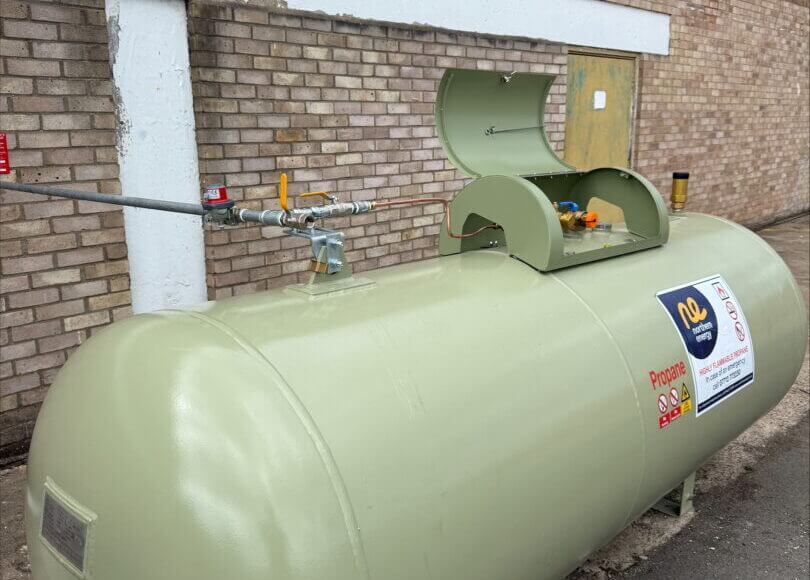
Energy keeps every business running, from the ovens in bustling hospitality kitchens to the boilers that heat care homes, the forklifts powering warehouse operations, the lodges at holiday parks, and the sheds for poultry rearing. For many rural off-grid businesses across the UK, that essential energy comes from LPG (liquified petroleum gas): a fuel that’s reliable, efficient, versatile, and one of the cleanest conventional energy sources available.
But even the safest fuels demand respect. LPG is extremely safe when stored and handled correctly – and potentially dangerous when it’s not. The difference comes down to simple daily habits and consistent awareness.
In this blog, we’ll break down the essential do’s and don’ts of LPG fire safety, helping businesses across every sector protect their people, their property, and their productivity.
Why fire safety around LPG matters
LPG is stored under pressure, and if a leak occurs, it releases a highly flammable vapour. Because that vapour is heavier than air, it can travel along the ground and collect in confined or poorly ventilated spaces – where even a small spark can cause ignition.
Add that to the mix of machinery, electrical systems, and busy environments found in sectors like agriculture, warehousing, hospitality, and care, and you’ve got a strong case for why LPG fire safety should never be an afterthought.
✅ The Dos’ – smart practices for LPG safety
Ventilation: Let the air do the work
LPG is heavier than air, which means that if a leak occurs, the gas can settle at ground level, creating a hidden hazard. Proper ventilation is your first line of defence. Make sure there’s plenty of open space around your tank(s) so air can disperse and pockets of gas don’t build up.
It’s also important to keep the area around your tank free of rubbish or debris, especially anything combustible that could catch fire. Even greenery around the tank needs careful attention: some weedkillers, like chlorate-based products, can make dead plants more flammable. Regularly trimming grass and weeds and keeping the tank perimeter tidy is a key safety measure.
Keep naked flames and ignition sources away
It might sound obvious, but you’d be surprised how often it’s overlooked. Smoking, using welding equipment, or even certain electrical devices can all ignite LPG vapour. There’s a recommended minimum separation distance between any LPG storage tanks and any fixed source of ignition – follow guidance from the HSE to make sure your site complies.
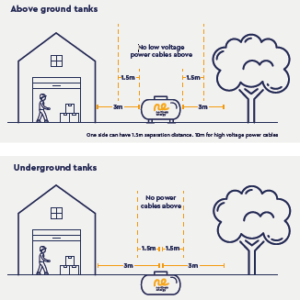
Display clear signage and never remove tank safety stickers
Your LPG tank’s safety sticker isn’t decorative – it’s there to communicate risk, display emergency telephone numbers, and give clear information to the emergency services about the contents of the tank.
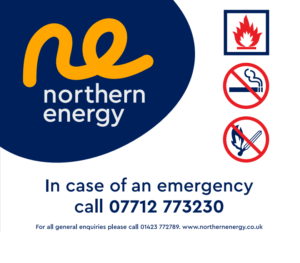
Put up ‘No Smoking’ and ‘Flammable Gas’ signs, making sure they’re visible and legible at all times. These signs help everyone on site, from staff to delivery drivers, understand the hazard and behave safely.
Regularly check for leaks
Even a small leak can become dangerous if left unchecked. Simple visual inspections and routing checks (using soapy water) can catch issues early. Make it part of your regular safety routine – it’s better to spend a few minutes than to deal with a major incident later.
Explore more about how to prevent leaks and respond to gas emergencies.
Keep access to the tank clear
Your LPG tank needs to be reachable at all times. That’s not just for your delivery driver who needs good access to fill your LPG tank – engineers require access for regular maintenance, and importantly, it’s also required for emergency responders in case of an emergency.
Avoid stacking materials near the tank, or blocking the path, and ensure vehicles don’t block access.
Train your team
Safety isn’t just about equipment; it’s about people. too.
Everyone on site should know how to shut off the gas supply safely, choose and operate the correct type of fire extinguisher, and raise the alarm quickly in an emergency.
If a fire does break out, evacuation comes first. Call the fire brigade immediately, and make sure they know there’s a bulk LPG storage tank on-site – it’s critical information for their safety and effective response.
❌ The don’ts: Common mistakes that put businesses at risk
Don’t smoke, weld or use naked flames near LPG tanks
It sounds obvious, but accidents happen when people assume ‘it won’t happen here’. Whether it’s a forklift driver having a cigarette break near the storage area, a welder doing quick repairs, or even someone using a spark-emitting tool, LPG vapour is highly flammable and can ignite in seconds. Keep all ignition sources well away – and reinforce this rule with your team regularly.
Don’t enclose your LPG storage tank
It might seem like a good idea to hide your LPG tank in a shed, or behind a fence or wall – after all, they’re not the most attractive feature!
But enclosing it can actually create a serious fire hazard, as in confined spaces LPG vapour can build up quickly. Always make sure your tank’s location complies with Bulk LPG storage tank regulations.
Don’t tamper with tanks or remove safety stickers
Do not attempt DIY repairs on valves – these should only be carried out by a Gas Safe registered engineer. Do not remove tank stickers – they’re a communication tool for anyone interacting with the tank and contain important emergency information.
Do not paint your tank - changing the colour can increase the amount of heat it absorbs from the sun.
Don’t ignore small leaks or unusual smells
Even a faint whiff of gas is a warning sign you shouldn’t ignore. Never assume it’s nothing – LPG leaks can start small and quickly escalate if left unchecked. Evacuate the area immediately if needed, shut off the gas supply safely, and contact your LPG supplier without delay.
Don’t block access routes
Time is critical in an emergency. Pallets, vehicles, or garden equipment blocking the tank can delay the emergency services or hinder staff trying to shut off the supply. Do not park vehicles next to the tank, or in the case of an underground LPG tank, in the area above it. Keep a clear perimeter – it isn’t just good practice, it can be a life-saver!
Final takeaway
LPG is an incredibly safe and efficient fuel – when it’s treated with respect and managed properly, and risks are properly identified and managed. A proactive approach to LPG fire safety, including correct storage, regular inspections, and ongoing staff training, isn’t just a box-ticking exercise – it’s an essential layer of protection for your people, your premises, your peace of mind – while safeguarding your business.
When your bulk LPG tank was first installed, its location would have been carefully chosen to comply with Codes of Practice, including safe distances from buildings and other structures. Planning changes to your premises – whether building a new structure, erecting a fence, landscaping near the tank, or even moving the tank itself – requires consultation with our LPG supplier to ensure safety and compliance are maintained.
At Northern Energy Gas, we help businesses build a stronger safety culture through expert guidance, on-site inspections, and hands-on training.
Don’t wait for an incident to check your safety measures - contact Northern Energy Gas or call us today on 01423 772 789 (North) or 0118 229 4747 (South) and let our team ensure your LPG setup is as safe as it can be.